All posts tagged ‘data’

by CalebApril 21, 2010

SMS Alerts: Boston Marathon Tracks Runners Using RFID

During the Boston Marathon Monday, disposable RFID chips were used to track runners throughout the race.

"When the runners go over a mat ... we collect the data time," said John Burgholzer, IT director for the Boston Marathon. "It takes a date stamp and it will wirelessly transmit it to use in the data center here for scoring results."

Family and friends watching the race could sign up on the BAA website to follow any runner. The ability to follow via SMS alerts, sent at four points during the race, was also extremely successful.

Watch the video coverage here.

[via pcworld]

by CalebNovember 16, 2009

Visualizing Our Mobile Connectivity With Art

art

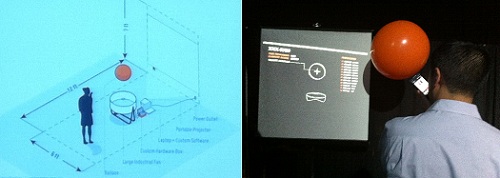
While we're using iPhones, netbooks, and wireless keyboards we don't usually imagine the data that is being transferred across the spaces we are in. Artist Willem Besselink has a series of "physical data" installations which visualize just this. Of course frequencies are ever-moving, but it is interesting to stop and think about what enables our mobile connectivity.

[via brainpickings]

by MBOctober 16, 2009

The Numbers Point Towards Mobility

With technology's every advance comes an increased rate of evolution. The numbers above visualize this and point to a movement towards mobility. More and more often, tools are being used on-the-go as iPhone apps are developed and downloaded. Just look at the money made off of global mobile messaging and data, or the number of SMS's sent worldwide! It reminds us of Sprint's Plug into Now effort.

by CalebOctober 15, 2009

30,000 Feet Above Earth: Mobile Web Applications Socialize Air Travel

myskystatus

Beginning last week some Facebook and Twitter users noticed their streams become populated with travel updates from friends flying all around the world. Notices let followers know that they had landed, and luckily not in the Hudson River. This social media “auto-pilot” of sorts is the doing of Lufthansa’s new web app MySkyStatus, a smart move by the brand to socially seed their name. By visiting the website, entering flight information of any airline, and connecting to a Twitter or Facebook account, MySkyStatus will automatically update friends and followers on your whereabouts. Profero NY, the agency responsible, wanted to create a more complete air travel experience by providing this useful service, and in their own words "socialize travel."

airplane-wifi

It makes perfect sense that airplanes would tweet, as they are, in a sense, the embodiment of mobility. There is an entire culture surrounding air travel and brands have been working hard to build around its quirks. Most airlines are already using Twitter@JetBlue has over a million followers. It seems as if every day another airline announces in-flight Wi-Fi, which now comes with advertising. With planes connected to the grid, frequent flyers can now interact socially in yet another unique environment, one that is enclosed 30,000 feet above Earth.

just_arrived

What is possible in this period of time where users are fastened in? Using the power of data, apps could be created giving flyers the ability to follow detailed airplane and flight status, a modern update to listening in on the pilot radio. With location awareness, entertainment could be provided related to what the plane is currently passing over. Layovers are another element in themselves that agencies can play with. As companies like Profero collect the data made possible through apps, more intricate insights will be made visible. We're sure to see developments in social and travel hybrid applications as their similar DNA lie in natural human behavior.

by CalebOctober 9, 2009

NYC Improving Urban Life With Mobile Tools, Crowdsourced Innovation

NYC BigApps

"Municipal" and "innovative" are two words rarely heard together, but New York City has been pleasantly surprising us lately. In the past few weeks, we've across several government-led efforts that use digital and mobile technology and a more open ethos to improve urban life.

In the vein of the U.S.'s DATA.gov initiative, the city rolled out the NYC BigApps program this week, an invitation for developers everywhere to get their hands dirty using the city’s data. With complete access to over 170 data sets, found on the NYC.gov Data Mine, it is expected that we’ll begin to see a series of innovative mobile and online applications. As the deputy mayor said during Tuesday's NY Tech Meetup, this is “just the beginning” and the city “plans to open more data sets in the future.” Hopefully we'll see useful applications like those built on San Francisco's BART data sets.

Another of Mayor Bloomberg’s hip initiatives is the 311 system, which is designed specifically for requests and complaints regarding problems like trash buildup or graffiti. To help create a user-friendly and convenient service, they have released an iPhone app that uses the built-in GPS and camera to help tag and submit cases.

bridge

The city is also creating tools to learn more about our environments, essentially using mobile to make the city clickable. Ever wonder how the local beavers and their habitat are doing? Now it’s possible to text them and through a series of vertically positioned plastic tubes receive an answer. Mobile also makes it possible to answer that on-the-spot question, like what you're looking at by texting DUMBOVIEW to 41411.

dumboviewSMS

Mobile can truly transform how you experience the city, and we're hoping municipal agencies will continue to embrace open innovation and leading-edge technology. Now the question is: will Bloomberg become the "mayor" of City Hall on Foursquare?

by CalebOctober 6, 2009

In a Sea of Devices, a Need To Be Seamless

microsoft-myphone

Cheaper manufacturing is allowing designers to create a multitude of gadgets to fit our every need. On top of PCs, MP3 players, laptops and mobile phones, the netbook category is growing fast, and  rumors of an Apple tablet have been circulating for months now. While having all these gadgets is great, data needs to be managed in a seamless fashion across this increasingly fragmented inventory of screens. Sure, Flickr and YouTube do the 'cloud' with crowd-sourced media, but where are our options for syncing more personal, secure, and private files? We just won't settle for USB drives or floppy discs anymore.

idisk

Perhaps a pioneer in this area, Apple has been offering data synchronization with MobileMe since 2002. The service pushes contacts, calendars, and mail to iPhone, Mac, and PC. Also included is iDisk, which with the new iPhone application allows storing, sharing, and accessing of files across devices.

synced-data-chart (1)

Many other companies are attempting to create a solution for managing personal data. Microsoft brings these features with the new Windows 7 and mobile specific 'My Phone' service. Naturally, Google is in the cloud with Docs, Chrome bookmark syncing, and Sync for Mobile. Smaller, but successful, startups in the space include Dropbox and Drop.io (both have apps that make files iPhone accessible). And now there is Best Buy's new mIQ, which seeks to brand this mobile trend. All make the transition from performing functions on one device to another smoother, as the data is available in either location. One hurdle to mass adoption seems to be the platform bias of some services, for example, Microsoft's 'My Phone' plays well only with phones running Windows Mobile 6.

spotify-iphone-android

It seems that many are trying to become the one service to rule all data, but could it be that it is too big a task? Truth is, our individual digital rituals and behaviors vary too much for one software solution to address them all. Focused development will be key. This is happening in the cloud-based music space, for example.  Being niche allows start-ups like Spotify, Lala, and Rhapsody to notice the most specific of our music listening habits and needs, then to design for them. With a fragmented market of gadgets, do we need a mass-market "vanilla" cloud for synchronized data, or a wide offering of apps for our variety of needs?

In any case, the proliferation of these cloud-based solutions points to an overarching need—the need to be seamless. Right now, it’s a frustration for users, but it will soon be an expectation.

by MBSeptember 2, 2009

News to Us: Nokia's Lifecasting with Ovi, MedMinder, GPS Hacking, Yelp AR App and More

yelparapp

  • Pushing the buttons for social change | The Hindu (via MobileActive)
    A one-day camp, Mobile Tech 4 Social Change, will held in Bangalore this Thursday to exploring the power of mobile technology to advance social change goals. Participating NGOs will discuss problems and different ways to use, deploy, develop and promote mobile technology in health, advocacy, economic development, environment, human rights, and citizen media to name a few areas.
  • Mobile Web Use to Triple, says Forrester | Mobile Marketing Magazine
    According to a new Forrester Research forecast, by 2014, nearly 40% of European consumers will be tapping into the web via their mobile phone.
  • Nokia Sets Facebook Deal, Launches New Phones | WSJ.com
    Today Nokia showed off new music phones and multimedia services, including a "Lifecasting with Ovi" offering that integrates its phones with social-networking service Facebook.
  • Napster Commits iPhone-cide; Opts Out Of Streaming App Competition For Now | mocoNews
    While RealNetworks looks for Apple to approve its Rhapsody iPhone app and newcomer Spotify prepares to launch, the wait for a similar streaming app from Napster is over: there won’t be one. Apparently the Best Buy subscription music service has designed an app that would allow subscriber streaming to the iPhone but won’t submit it for Apple approval “due to the high licensing fees for streaming to a mobile phone."
  • Audible adds mobile calls to action to traditional advertising | Mobile Marketer
    Print ads for the audiobook seller include a mobile call to action, asking consumers to text AUDIBLE to short code 35620 to get a bestseller free. The mobile calls to action are present within New York Times and Wall Street Journal print ads, online via banner ads, and on New York City subway trains. We've seen a few similar ads on the subway and have to wonder if that's the best idea, considering there is rarely reception down there.
  • New gadgets prod people to remember their meds | The Boston Globe
    A study released this month by the New England Healthcare Institute found that anywhere from a third to a half of all Americans don’t take their meds, or don’t take them at the right time or at the right dosage. To address this, MedMinder has designed an intelligent pill organizer called Maya that reminds patients when each pill needs to be taken.
  • GPS Hackers Blaze Own Trails With Crowdsourced Maps | Wired.com
    Roughly half a million people are eschewing proprietary maps information from GPS companies and instead going with crowdsourced versions, all based on data from map hack site OpenStreetMap.
  • July 2009 Metrics Report | AdMob Metrics
    Mobile ad network AdMob surveyed over 1,000 of our iPhone, iPod touch and Android users to find our more about their interaction and download behavior with apps. Highlights include:
    • Android and iPhone users download approximately 10 new apps a month, while iPod touch owners download an average of 18/month
    • More than 90% of Android and iPhone OS users browse and search for apps directly on their mobile device instead of their computer
    • Upgrading from the lite version was the top reason given when users were asked what drives them to purchase a paid app
    • iPhone and iPod touch users are twice as likely to purchase paid apps than Android users
    • Users who regularly download paid apps spend approximately $9 on an average of five paid downloads per month
  • Yelp Brings First US Augmented Reality App to iPhone Store
    Social review service Yelp has snuck the first Augmented Reality (AR) iPhone app specifically for the US into the iTunes App Store. The "easter egg" feature allows iPhone 3Gs owners to shake their phones three times to turn on a view called "the Monocle," which uses the phone's GPS and compass to display markers for restaurants, bars and other nearby businesses on top of the camera's view.
  • Coupons You Don’t Clip, Sent to Your Cellphone | NYTimes.com
    Mobile coupons — usually text messages with discount codes sent to a cellphone — are becoming the blue-light specials for the digital age, promoting last-minute clothing sales, two-for-one entrees and cheap tickets to the theater.
Page 1 of 3123