All posts tagged ‘lbs’

February 26, 2010 by Allison

Socialight's New Platform Lets Brands Roll Their Own Location Based Services

socialight

This article was originally published at AdAge.com, where we contribute content for the Digital Next blog.

Looking beyond the web, marketers are considering location-based services as a way to extend their reach and engage consumers in the "real world."

Some, including Bravo, HBO and Warner Brothers, are partnering with consumer-facing location-based services (LBS) like Foursquare to do so. Others are seeing a benefit in creating their own communities and geo-apps, though this can be a development-heavy and costly process. Through a new DIY platform, Socialight hopes to make this a much simpler proposition.

The new Socialight Community Platform, launching today, is designed to help enterprise clients connect multimedia content and information to a map interface, which users can access via website, WAP site, or iPhone app. Think of it as Ning for LBS. Ning developed as a MySpace alternative for organizations to create their own niche online social networks. Likewise, Socialight allows anyone build their own Foursquare, Yelp, Gowalla, or SitOrSquat, customized for their own objectives.

"It makes sense for brands to work with existing location-based services when they want to market specifically to the demographic using that LBS within the feature-set that's available via that service," Socialight's founder, Dan Melinger, told me. But, he said, that may not always align with a brand's goals and existing location-based services are relatively small -- they might not overlap with a brand's the existing and target demographics for most brands.

app

Socialight was formerly a consumer-facing service but shifted focus last year to becoming a B-to-B platform provider. It powers Travel Channel GO, a mobile app from the Travel Channel that enables their viewers to explore a destination through the eyes of show hosts, such as Anthony Bourdain. Chris Ackerman, director of business development for Travel Channel Media, likes it for the flexibility in the content and features that we're able to offer our users, which can help simplify deeper integration into our other platforms."

Indeed, Socialight sees LBS as a major opportunity for the Hotel and Tourism industry. They are currently working with Fashion 26 -- a Wyndham Hotel in New York City on a mobile concierge application. Deirdre Yack, the hotel's director of sales and marketing, sees it as an extension of the hotel's concierge services that will curate the Fashion District and other areas for guests, marking spots they should shop, pinging them with nearby deals, or hooking them up with free passes, for example.

There is also the option of monetizing a branded application. Location-based advertising is poised to be a huge money maker with local and national advertisers alike looking to target consumers based on location and indications of purchase intent. While Fashion 26--A Wyndham Hotel's app is purely a guest service right now, think about the co-marketing and local promotional opportunities of which it could take advantage.

Bar

Travel Channel and Fashion 26 -- A Wyndham Hotel are both users of Socialight's custom "Enterprise" option, but the new launch will also include an Express Beta that makes it so easy to make an LBS "your mom can do it," Melinger bragged to me. Through Socialight's new administrative interface, customers can do everything, including create and launch custom iPhone apps, without writing a single line of code.

Of course, creating an app is not all a brand should be doing in mobile, but now that the barriers to entry are getting so low, expect more in the App Store. What's most compelling about geo apps in particular is the ability to tie digital content to location, essentially overlaying the web on the real world. When possible, more branded apps ought to provide this type of utility and utilize the unique attributes of mobile.

Most brands would be wise to use a multi-pronged mobile strategy. It's all a matter of going where the fish are -- some may be on existing social networks, while others can be reached through other marketing channels. As Travel Channel Media's Ackerman says, "We realize that not every mobile user is going to be a Travel Channel GO user, so we plan to enable users to sample content where they expect to find it for us, making integrations with existing LBS applications also interesting to us."

February 9, 2010 by Allison

Zagat Expands Mobile Strategy through Foursquare

zagat

Restaurant guide Zagat has been working hard to shed its pages and better compete with digital properties such as Yelp and UrbanSpoon. They’ve made their website social through their blog, Zagat Buzz, created a mobile optimized website and mobile applications, including one that use augmented reality. Now, they are going both mobile and social through a new integration with Foursquare, the popular location-based service.

“Zagat’s mobile strategy has always been to make our content available to customers wherever and whenever they need it,” Zagat’s Ryan Charles tells us. “Our partnership with Foursquare seems like a natural progression. There is an obvious synergy between Zagat’s expertise in helping people make quick, informed dining decisions and Foursquare’s location-based platform.”


Zagat’s integration aims to tap into several of these components:

Editorial Content
One aspect of Foursquare is about learning new information about places. When a users “checks in” at a venue, they will often see a “tip” pop up about where they are or somewhere nearby. To date, these “tips” have largely been left by fellow users, but by friending Zagat – something that is conceptually new to Foursquare--users can see tips from their editorial team. These might tell you an entrée to try, recommend the best night to dine, or tell you what dessert to save room for. Check them all out on Zagat’s new brand page. Charles says since dining and nightlife are the foundation of the growing Foursquare community, “Zagat is positioned to be a key part of that ecosystem.”

zagat foursquare tips

Game Play
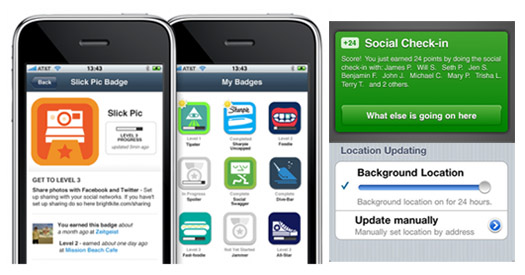
Part of Foursquare’s appeal is competition – users are rewarded through a system of points, mayorships and badges. As such, the app turns into an ongoing game, both encourages use of the service and making it more fun and social. Zagat tapped into this aspect of the platform with a Zagat “Foodie” badge, which users can earn when they check into any five Zagat-rated restaurants. “Foursquare users are checking in to thousands of Zagat Rated restaurants and bars every day,” says Charles. “Now they can utilize Zagat’s trusted content when they are on the go and enjoy added gameplay incentive at the same time. “

Loyalty Rewards
One particular recognition on Foursquare is the “Mayor” honorific, which is bestoyed upon the user who frequents a venue the most. Unless the venue has a “Mayor Offer” that rewards this user, the appeal of this honor has just been social capital i.e. looking cool for other users. Zagat is creating an extra incentive through a new “Meet the Mayor” series in which their blog editors will be interviewing mayors of Zagat restaurants. These most-loyal customers will be asked questions like “why is this your favorite place?” or “what could you do with your mayoral powers to change the restaurant?’ The interviews will appear as a series for their blog, Zagat Buzz, and their email newsletter through zagat,com. We are having fun with the idea of being a mayor,” says Charles. It is also a smart move by Zagat from a content strategy perspective, as Zagat can rely on these power-users to promote these blog entries on the social web.

Currently these components are live in five cities—New York City, San Francisco, Los Angeles, Boston and Chicago. Charles says Zagat is “targeting an urban social audience that is enthusiastic about dining out.” It is certainly getting great exposure amongt Foursquare’s leading edge users. When asked if he thought there are enough people using the service for this to gain reach, Charles noted that as Foursquare expands from a social game to a platform that offers real-world incentives for users (like discounts and specials), their reach will undoubtedly expand.

When asked if they will be integrating Foursquare into their mobile app, Zagat to Go, Charles says they are taking a wait-and-see approach. Indeed, that sort of reverse integration – perhaps letting users “check in on Foursquare” just as you can “send to Twitter” or “log in using Facebook Connect” – will be key in helping Foursquare grow its users base as well.

January 20, 2010 by Caleb

Location: It's All About Context

simplegeo

Location is finally becoming central to our digital identities and our connected selves. Consumer mobile devices are now packing in GPS functionality, on-the-go data consumption is at an all-time high, and location-based social networks are growing fast. This trend is going to impact marketing dramatically in the coming years, mostly because it provides a point of context.

Media planners understand the importance of context. The environment of an outdoor placement or the juxtaposition of an online banner ad can make or break a message's success. To best target an audience, knowing their location is incredibly important. It can be argued that it is the most critical piece of information to know about someone.

With increasingly powerful mobile devices, we are in the early stages of creating what sci-fi author Bruce Sterling calls a spime – an always-on, broadband-enabled device that knows where it is in space and time. These ever-present devices will make sending a message to a receiver at a time of perfect reception entirely possible. Not only will this transform marketing, but it may actually improve the lives of consumers as well.

Currently the technology is rudimentary and fragmented, but several startups are attempting to simplify it. GeoAPI, recently acquired by Twitter, is creating a digital library of exact locations (currently it has 16 million). This geo-database can help a startup looking to get into location-aware services. Similarly, SimpleGeo sees itself saving developers months of work by building and scaling location infrastructure for them. Xtify lets you location enable your web application without writing any native mobile software. Atlas CT provides a number of SDKs and APIs for easy development of location-based apps. Other players like Navteq and Foursquare are crowdsourcing Points of Interest for their own APIs.

While these API services are paving the way for creating an open-source digital representation of our world, this information alone will not suffice. If networks were to push advertising based on location alone, it would most likely be spam. This is because location isn't the same as context, or the set of circumstances or facts that surround a particular event or situation.

Developers are beginning to release examples of applications that combine location with a specific context. Happy Hour app takes the motivation of finding a quick drink and provides. GateGuru (think Yelp for the airport) drills down to an average user's layover experience. Brightkite is experimenting with targeting users with advertising through predicting context using past behavior. We are creatures of habit, and once enough check-ins are captured, ads can be served through pattern recognition.  Meanwhile. Foursquare uses a more social strategy to provide context.

At the end of the day, a vast amount of data is important, and this is a why all eyes are on Google this year. The company is pushing hard into the mobile space with its recent announcements for Google Goggles, Favorite Places, Nexus One, and even an attempt at acquiring Yelp. While these moves are impressive, they only scratch the surface of what the company intends on accomplishing. Marissa Mayer, Google's VP of Search Products and User Experience, has in mind the ultimate goal of intuitive search, or presenting information to users before they even know what they’re looking for. The only way to accomplish this is through taking a user’s total context, and that is only possible through powerful, always on, mobile sensors - our mobile phone. Essentially, Google hopes to bring its behavioral targeting of the web to the physical world.

Google is in the same boat as every other service hoping to target the future of mobile consumers. To be able to reach an individual in that moment where an advertising message is considered relevant is the next step in marketing. With startups and giants alike laying the essential locational groundwork and building upon it, perhaps this will be soon to come.

December 17, 2009 by Caleb

Rally Brings Real Friends Together, Avoids Location's Social Paradox

rally

Location based social networking is still young, so it is only natural that there be experimentation with the rules that define services. Rally joins in on the competition with apps like Brightkite, Gowalla, and Loopt by pushing less, not more.

The current leaders in the space see a location based social paradox: the more friends you have, the less useful the service is. While networks like Facebook and Twitter break natural relational conventions through "friending" hundreds, if not thousands of people, doing this on Foursquare ultimately ruins the experience. Location is often useless without the right social context. Foursquare attempts at staying relevant by only showing users updates from friends in the same city.

Rally does not pull in contacts from Facebook or Twitter. It still lets you check into places and offers a few cool new features (temporary locations, a private home check-in, and tons of badges) but the hope is that by promoting a tight-knit social graph it will avoid that so-called social paradox. While digital technology allows developers to tweak communication with new rules (Twitter's asymmetric following), there still is that fine line that must be kept in mind for long term success.

November 12, 2009 by Kyle Studstill

SCVNGR XPLR Mobile Powers Location-Based Experiences

SCVNGR1-525x187

Building from a proprietary game-dynamics engine and a powerful routing algorithm they call SmartRoute, the Boston-based startup SCVNGR operates a consulting service for organizations looking to engage audiences with location-based games and experiences.

Constructing a large-scale, mobile-based scavenger hunt, one of SCVNGR’s most recent projects was the Diamond Dash that launched this June. Hundreds of treasure hunters scoured the streets of Toledo in search of a $12,000 dollar ring and other jewelry, navigating a SCVNGR-powered system to collect game points and clues. The jeweler David Fairclough provided rings for free, profiting from nationwide recognition the event has garnered.

b670d8cec25e87a679f3684c6f87f378

In addition to their platform-building services for larger projects, SCVNGR also built the less robust but free SCVNGR XPLR iPhone and Android apps, which allow users to organize small-scale location-based games with friends for non-commercial use.

This is a contribution by PSFK, a trends research, innovation, and activation company that publishes a daily news site, provides trends research and innovation consultancy.

November 10, 2009 by Allison

Don't Laugh. Stalqer Is Where Mobile Social Is Going.

stalqer

When buzzd's Nihal Mehta mentioned Stalqer at OMMA Mobile, he got a chuckle from the crowd. But while the name may be funny, this app is no joke. Stalqer is a new mobile friend locating service that is pending Apple's app store stamp of approval.

While similar to other location based services like Loopt and Foursquare, Stalqer does two things that those don’t: it passively gathers information, and it pulls in friends from other networks.

stalqer-1

As CNET explains:

On the mobile platform that matters, the iPhone, there's no way to do real-time location reporting without running an app all the time, and the iPhone doesn't allow background processes. And even if it did, it would draw down the battery. The Stalqer solution is to create a dummy e-mail account that pings the Stalqer servers whenever the phone polls for mail, which is, by default, every 15 minutes.

Competing mobile social apps require the app (Foursquare, Loopt) or site (Latitude) to be open for the user's location to be reported. Or they require a phone that supports background processing, like an Android device.

This makes Stalqer a good example of the Mobile Crowdsourcing trend we highlighted last week, in that it passively gathers data from people’s phones, using them as a type of sensor.

Your friends aren't on your friend-location service… Stalqer takes data from your friends' Facebook locations in combination with the live data from other Stalqer subscribers to give you a pretty comprehensive map of everyone you know.

Unfortunately, Facebook data is often wrong, and Stalqer doesn't yet divide location data from content posted in wall messages or on Twitter. [Stalqer founder Mick] Johnson says it will do that eventually. He says that the data is about 70 percent accurate at the moment but that "I think it will be enough."

What the app does is aggregate and match—combining what you can see with your Facebook login with your phone's contact list. It assumes that if you have the person's e-mail address on your phone that they're a real contact of yours, thus letting you track and contact them. While this sounds like a dubious assumption, Johnson says managing privacy well is a big part of the app. Stalqer doesn't break privacy settings or report data that isn't otherwise available to its users. Those running the reporting app can turn it on or off, control the granularity of its reports, and report different levels of data to different groups.

stalqer3

Johnson told CNet that all social networks will become mobile social networks and that location reporting must be a big part of their feature sets. We agree 100%. Right now, a lot of users are checking their Facebook and Twitter accounts from their phones, and this number will only increase. That is why the idea of pulling in friends from other networks is so smart; it will decrease the barrier to entry and spur viral expansion.

stalqer2

One more aspect worth highlighting is the app's augmented reality component, which shows you which friends are nearby and sorts by distance. This remind us of Aka-Aki, which essentially hyperlinks people, showing information about users nearby via Bluetooth. Combine Aka-Aki's functionality with Stalqer's friend viewer and you have the future of SNS--the ability to hover over a person and see all their profile information on your screen right there. And yes, this may sound creepy now too, but come on, it's truly amazing stuff. And likely a harbinger of apps to come.

You can follow @stalqer for updates from the company on their App Store status and other news.

Replacing Emoji...
Replacing Emoji...
Replacing Emoji...

November 8, 2009 by Caleb

ng Connect Program Intros LTE Networked Car of the Future

The ng Connect Program has revealed their plans for creating a digitally connected automobile experience for the future. The collaboration takes everything we've come to expect in a smartphone and enables it within an everyday vehicle, and in this case a Toyota Prius. Using LTE (4G) networks, movies and music will be streamed from the home computer via the cloud. Users, now drivers, will be able to find nearby locations, locate friends, and receive updates on weather, construction, and reroutes. Lately we've noticed quite a few developments in automobile connectivity, including a Taiwanese taxi equipped with WiMax. See the full version of ng Connect's video explanation here.

[via engadget]